

Contents
- What is UGC and what is it used for?
- What equipment do I need to get started?
- How do I build a portfolio that stands out?
- How do I set a good rate for my work as a UGC creator?
- Where do I find assignments and how do I increase my chance of a match?
- How do I write a good pitch?
- Do I need to be good at editing to start as a UGC creator?
- What about content rights?
- What can I do to stand out?
- How do you make sure clients keep coming back with new work?
More and more people want to start as a UGC creator. It makes sense: it is creative, you can earn money with it, and it is flexible work. But the first steps are often the hardest. How do you get started without experience? What equipment do you need? What do brands actually ask for? In this blog, we answer the most common questions from new creators.
What is UGC and what is it used for?
The first question people often ask is: what is UGC exactly? UGC stands for User Generated Content. These are videos or photos made by ordinary people for brands, often to use in ads or social media posts. Think of a review of a skincare product, an unboxing of a new gadget, or a short demo of a coffee machine. As a UGC creator, you make content on behalf of a brand, but you do not need followers or your own channel. You deliver the visuals that the brand itself uses.
The goal of UGC is usually to attract the attention of a brand's audience in a credible way. Creators respond to consumers' need to see real experiences and opinions. That is why your content should not only look good, but also feel authentic. UGC is about recognizability, trust, and creativity.
What equipment do I need to get started?
Fortunately, you do not need to invest in an expensive camera or microphone. A recent smartphone is enough to create high-quality content. Make sure you have good daylight or use a simple ring light that costs only a few tens of euros. Film with a stable image, so use a tripod or phone holder. For sound, a clip-on microphone is useful, especially for talking videos. As long as your image and audio are clear, you are already in a good place.
More important than the equipment is knowing how to use it. Pay attention to composition, make sure the background is calm, and record multiple takes. Also think about your framing: is the product clearly visible? Is your face clearly visible when you speak? With simple adjustments, you can make the difference between a messy video and something that looks professional. The better you master the basics, the more seriously brands will take you.

How do I build a portfolio that stands out?
A strong portfolio is your business card. Start with three to five videos that show different styles. Think of a tutorial, a testimonial, or a short lifestyle video. Choose products you are genuinely interested in, so you come across as convincing. Put the videos together in a clear presentation, for example in Canva, with clear titles and explanations. Keep your portfolio up to date and add new work regularly. Show practice material too if you have not had paid assignments yet. The main thing is to show what you can do.
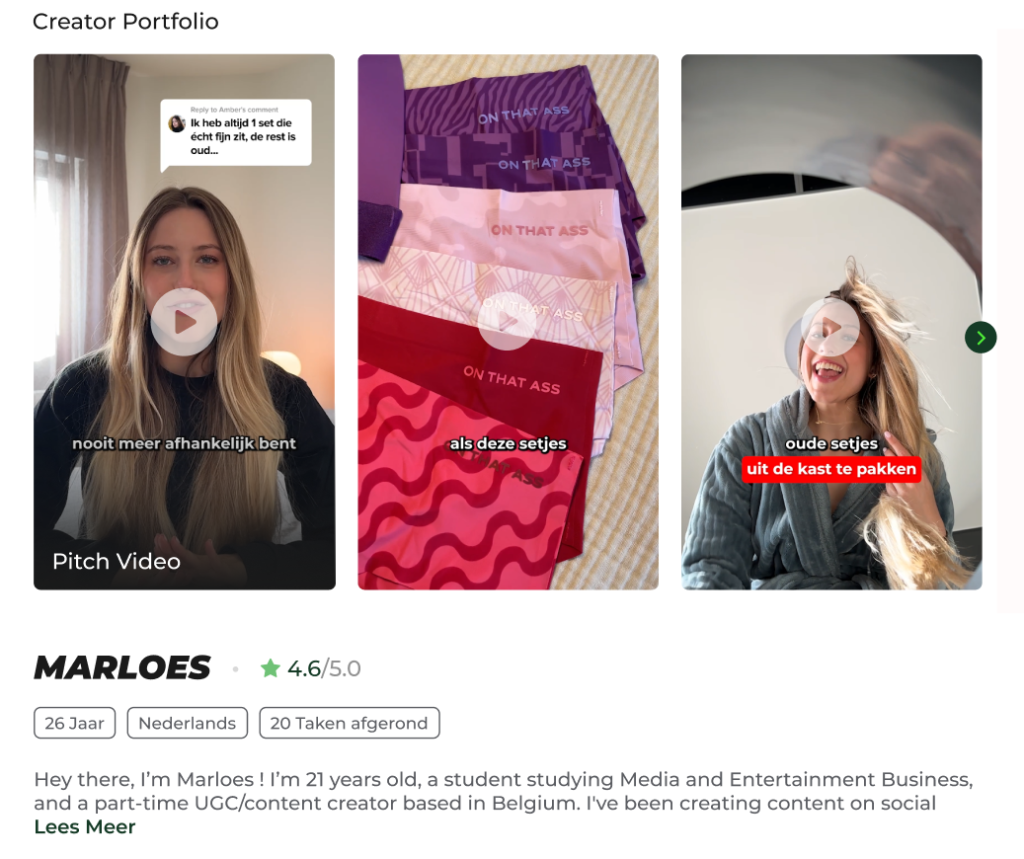
How do I set a good rate for my work as a UGC creator?
Setting rates is difficult, especially when you are just starting out. If you work through a platform such as Hyred, prices are often set in advance. That keeps it accessible. Are you working directly with a brand? Then do not only charge for filming time, but also for preparation, editing time, and usage rights. A video used in an advertising campaign is worth more than a story that stays online for one day. Make a rate card that gives an indication per type of video, including conditions such as revision rounds or urgent assignments. That makes you come across as professional and efficient.
Where do I find assignments and how do I increase my chance of a match?
Finding assignments can feel intimidating at first. But once you have done a few jobs, you will see that it is actually quite manageable. A platform like Hyred is a good place to start. You do not need to search for brands yourself: new assignments are posted every day. Make sure your profile is fully completed, including niches, languages, availability, and sample videos. Respond quickly and show initiative. Brands do not only look at quality, but also at reliability and speed.
In addition, you can also approach businesses yourself. Start with small or local brands you identify with. Send a short DM or email in which you introduce yourself, explain what you do, and include a sample video. Keep it personal and professional. One good pitch can be the start of a long-term collaboration.

How do I write a good pitch?
A good pitch is short, clear, and personal. Start with a sentence in which you introduce yourself and explain why you are interested in the assignment. Show that you understand the brief and mention which experience or style makes you a good fit. Add one or two examples of previous work. To stand out even more, you can choose to record a short pitch video in which you show yourself and speak directly to the brand. It does not have to be a perfect video; a personal introduction is more than enough.
Do I need to be good at editing to start as a UGC creator?
You do not necessarily need to be good at editing to get started as a UGC creator. If you work through a platform like Hyred, it is enough to deliver raw clips only and you never have to edit yourself. That is ideal if you have little editing experience or prefer to focus on filming and presenting. Want to learn editing anyway? Start with tools like CapCut, InShot, or VN. They are free and easy to use. Focus especially on the basics: quick start, clear cuts, subtitles, and a clear message. Keep it simple and avoid too many effects or filters.

What about content rights?
Content rights are important. If you work through a platform, these are arranged in advance, so you do not need to worry about them. If you work outside a platform, make clear agreements about where the content will be used, for how long, and whether it may be used as an advertisement. Always ask whether you may use the content yourself for your portfolio. That is not automatic, so it is better to check beforehand.
What can I do to stand out?
By positioning yourself well, you increase your chances of successful collaborations. That starts with choosing a clear niche in which you specialize. You will stand out faster as a UGC creator if you can show a portfolio with videos that match the brand you want to work with. Whether you choose skincare, fitness, tech, or fashion: the sharper your niche, the easier it is to stand out.
Also make sure your content has a consistent style. Think about your tone of voice, color use, framing, and the way you speak or present. Creators with a recognizable style stay top of mind with brands. Combine that with a professional work ethic: deliver on time, communicate clearly, respond quickly, and think along with the brief. Show that you are not only creative, but also easy and pleasant to work with. Overdeliver when possible, for example by delivering an extra version or a few more shots than requested. That is how you build a strong reputation. Creators who are professional, reliable, and substantively strong are booked more often and asked back sooner.
How do you make sure clients keep coming back with new work?
A first assignment is only the beginning. After delivery, ask for feedback and send a thank-you note. If the collaboration went well, you can send a new proposal a few weeks later: “Shall we do something for your new product as well?” Brands like working with people who are reliable and who think proactively. Keep your own overview of collaborations, deadlines, and contact persons too. The easier you make it, the greater the chance you will be booked again.