

Contents
Looking for paid UGC jobs in the United Kingdom or United States? UGC platforms can help you connect with brands without relying entirely on cold outreach.
Some platforms let creators apply to listed jobs, while others allow brands to discover and book creator profiles. Rates, editing requirements, usage rights and eligibility rules differ considerably, so it is worth using more than one platform.
This guide compares eight relevant platforms for UK and US creators. Availability can differ between the two countries, so always check the requirements for an individual campaign before applying.
How can creators find paid UGC jobs?
Make yourself discoverable: Add terms such as “UK UGC creator” or “US UGC creator” to your social profiles. Build a portfolio that includes talking-head videos, product demonstrations, testimonials, voice-overs and paid-social-style hooks.
Use direct outreach: Contact brands or creative agencies with a specific idea for one of their products. Keep the pitch concise and include one or two relevant examples.
Join a UGC agency: Agencies keep a roster of creators and contact suitable people when a campaign matches their location, age, appearance or content style.
Use UGC platforms: Apply to listed campaigns or publish a profile that allows brands to purchase your services directly.
UGC platform comparison for UK and US creators
1. Hyred
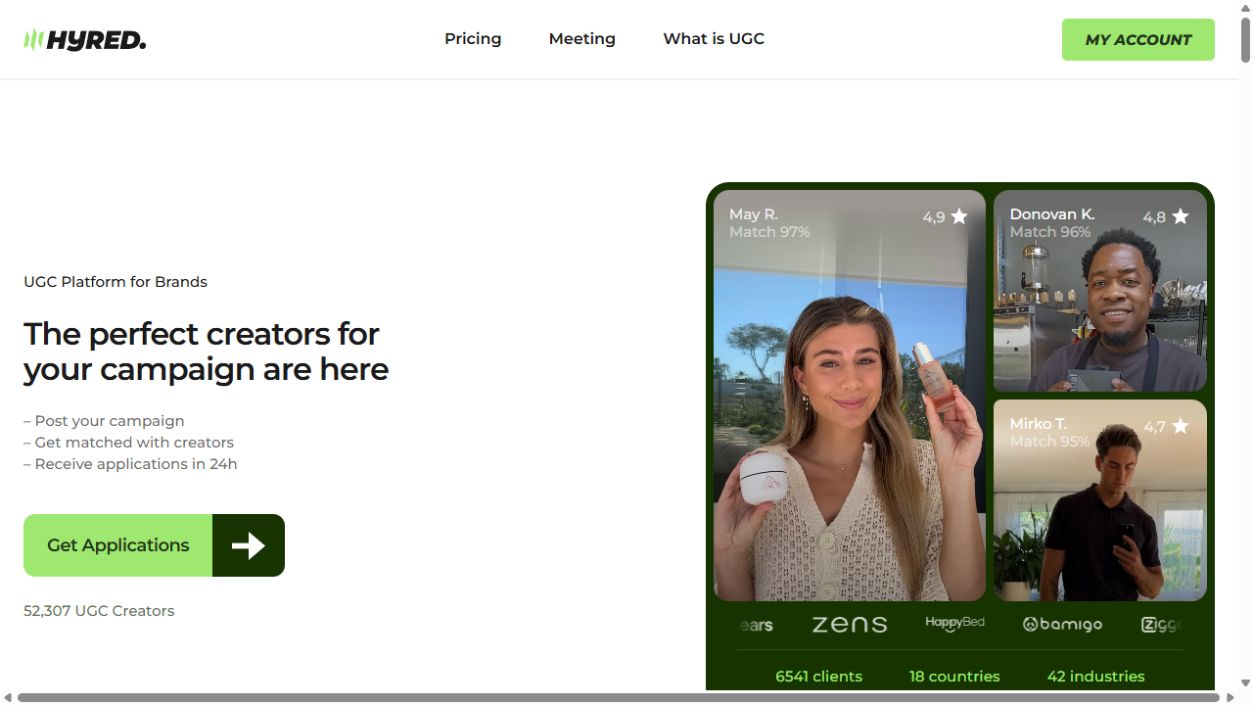
Hyred operates in both the UK and US, with a substantially established UK creator network and a growing US network. Creators choose which tasks to apply for. For selected tasks, Hyred provides the script and edits the final video. Creator compensation can reach €100 per UGC task.
✅ Advantage: No need to write the script or edit the final content.
❌ Disadvantage: Selection can be competitive, particularly for creators without a focused portfolio.
2. Billo
Billo accepts creators based in the United States, United Kingdom, Canada and Australia. No professional experience or established social following is required. Once a video has been approved, earnings are added to the creator account and paid through PayPal twice a month.
✅ Advantage: Beginner-friendly task marketplace with regular product-video opportunities.
❌ Disadvantage: The work is primarily task-based, which gives creators less room to negotiate each project directly with the brand.
3. JoinBrands
JoinBrands operates separate regional marketplaces in the US and UK. Brands list campaigns, creators apply, products are shipped or reimbursed and content is uploaded through the platform. Payments and campaign communication are handled within JoinBrands.
✅ Advantage: Wide variety of formats, including photos, UGC videos, social posts, short-form content and affiliate campaigns.
❌ Disadvantage: Some jobs require the creator to purchase a product before being reimbursed. The large creator network also means that popular jobs receive many applications.
4. Insense
Insense combines UGC, influencer posting, product seeding, partnership ads and affiliate campaigns. It operates in both the UK and US and allows creators to negotiate their compensation with brands. Payments are secured through the platform.
✅ Advantage: Particularly useful for creators who want to work on paid social, Spark Ads, Partnership Ads and longer-term brand collaborations.
❌ Disadvantage: Insense currently requires a strong UGC portfolio and publishes minimum social performance requirements, including follower or view thresholds. It is therefore less accessible to complete beginners.
5. Twirl
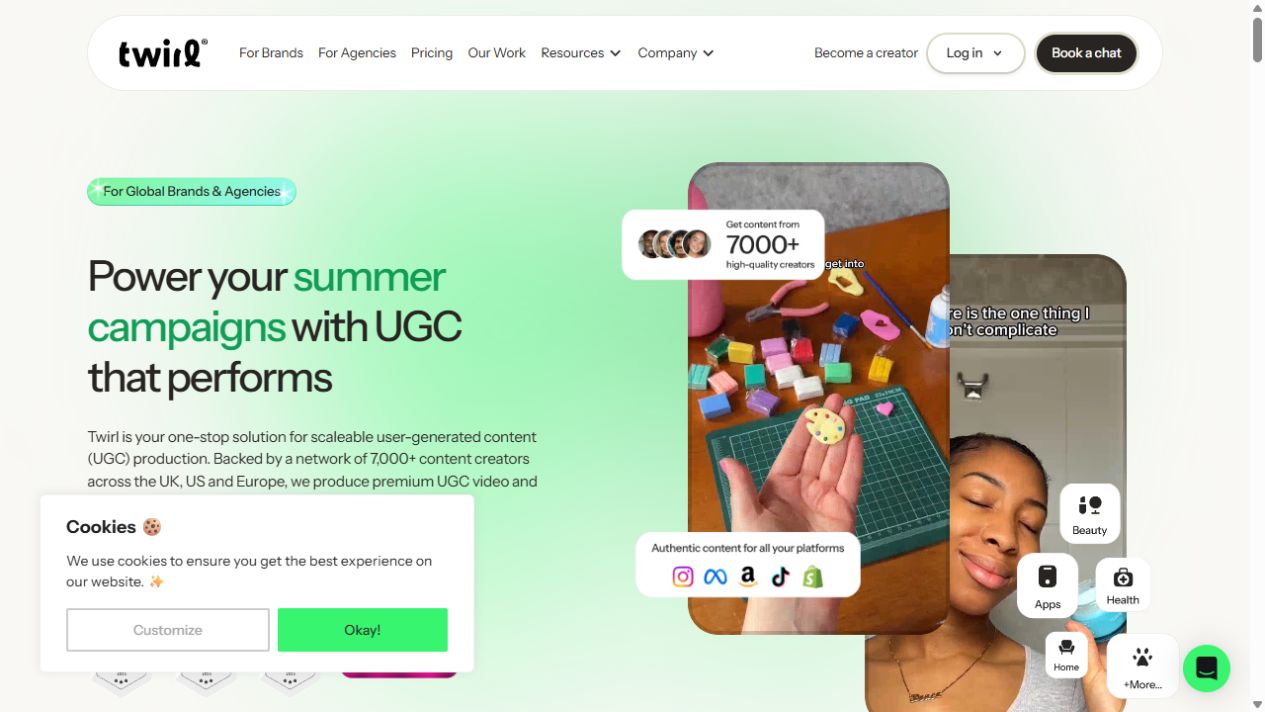
Twirl works mainly with creators in markets including the UK and US. The platform manages brand communication and allows creators to focus on production. All listed UGC opportunities are paid and approved work is generally paid within ten days.
✅ Advantage: Managed workflow, comparatively strong project rates and no follower requirement.
❌ Disadvantage: Twirl vets applicants and is currently prioritising particular locations, niches and age groups. Some applicants may be placed on a waiting list.
6. Influee
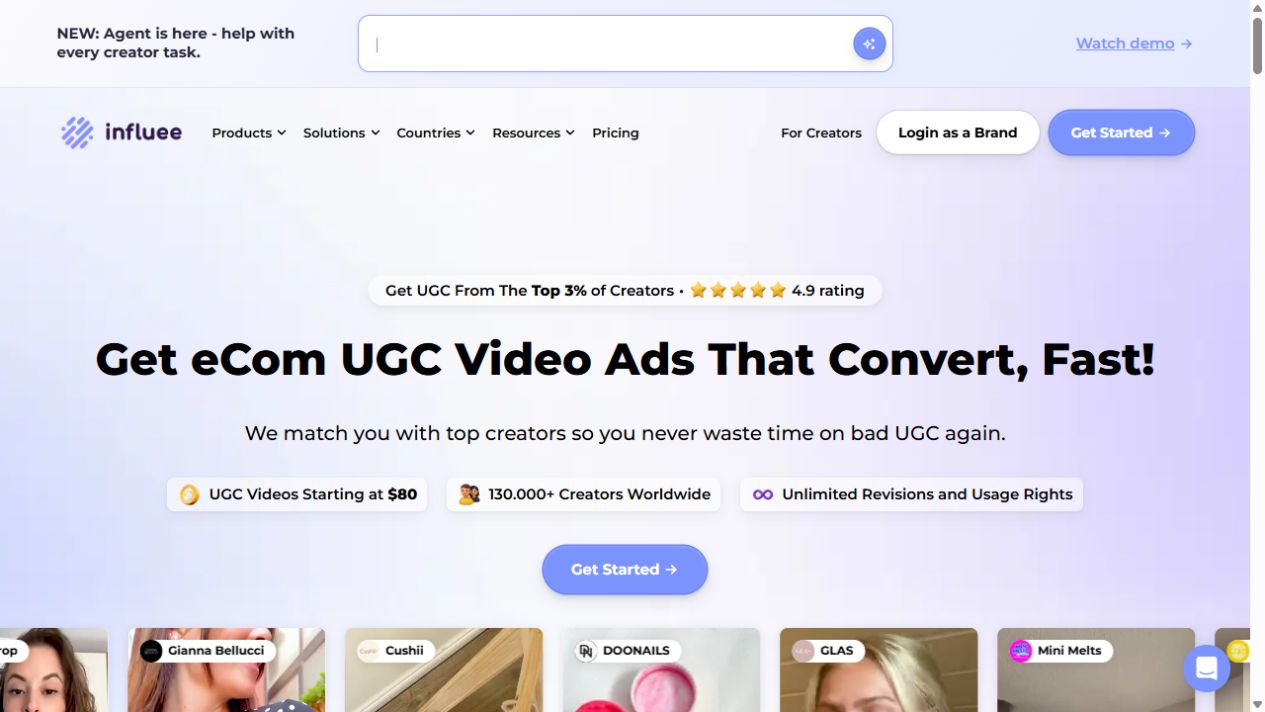
Influee operates in both the UK and US. Creators can work on UGC campaigns without needing a large social following, choose their pricing and manage approvals and payments inside the app. Completed collaborations include payment protection.
✅ Advantage: Flexible pricing and access to campaigns across multiple countries.
❌ Disadvantage: A large global creator pool creates competition, and lower-priced profiles may put pressure on marketplace rates.
7. Collabstr
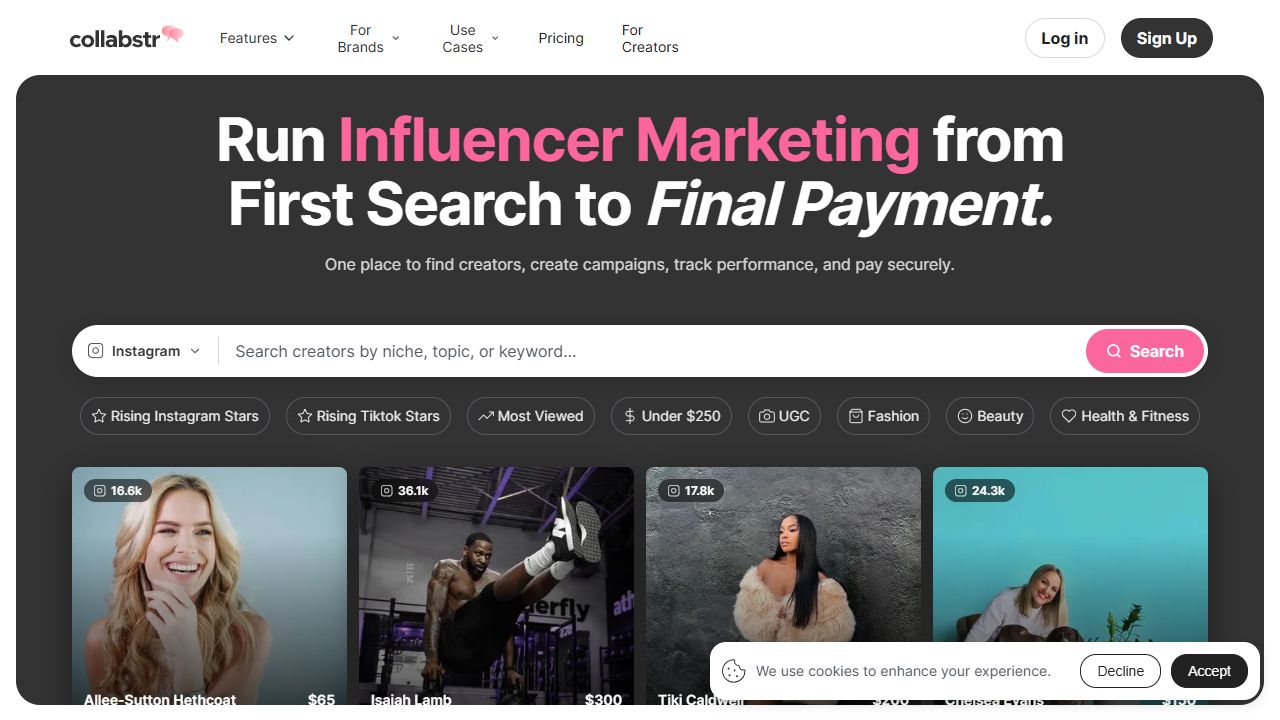
Collabstr lets creators publish fixed UGC packages with their own prices, deliverables and optional extras. Brands can discover profiles, purchase packages and manage payment through the marketplace.
✅ Advantage: You control your packages and can attract both domestic and international clients.
❌ Disadvantage: The marketplace contains a very large number of creators. Strong samples, clear positioning and positive reviews are essential for visibility.
8. Twine
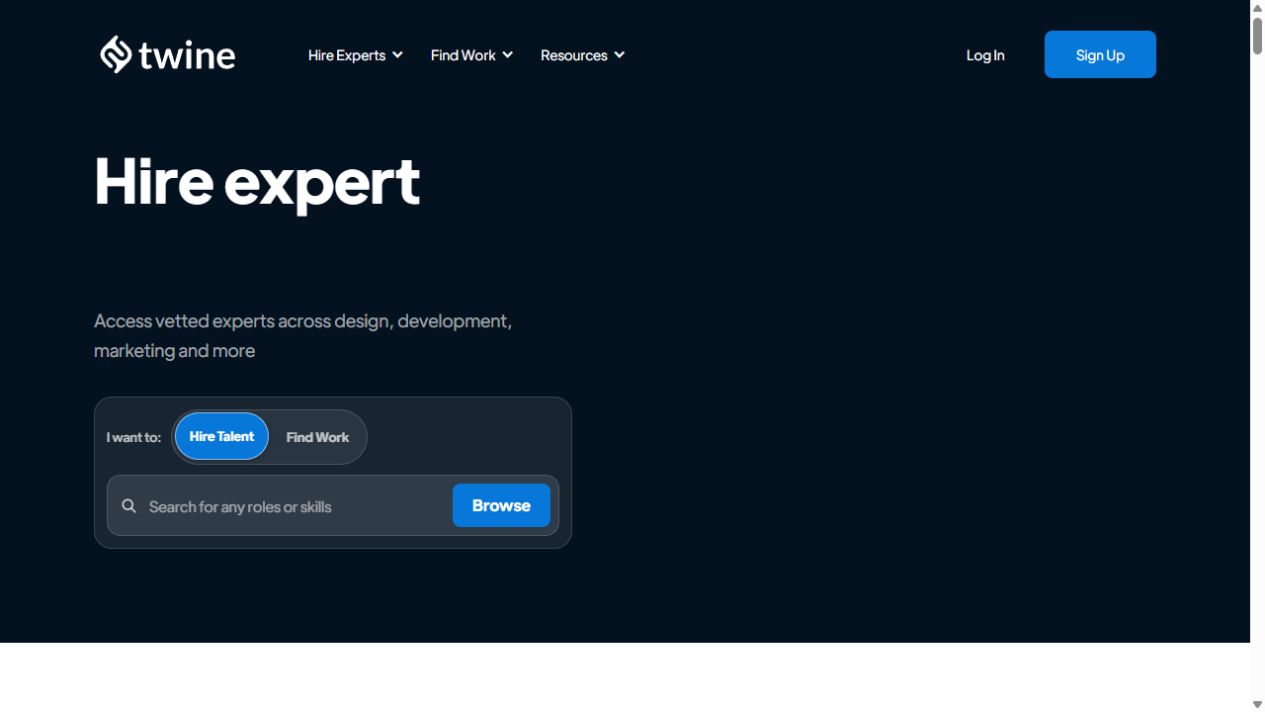
Twine is a broader freelance marketplace with a dedicated category for UGC creator jobs. Creators can apply to local or remote projects and combine UGC work with video editing, content production, voice-over or social media assignments.
✅ Advantage: Useful for finding individual projects and potentially building direct, longer-term client relationships.
❌ Disadvantage: Twine does not standardise every project. Rates, contracts, revision limits and usage rights must be checked with each client.
Conclusion
Billo and JoinBrands are strong options for high-volume, task-based work in both the UK and US. Twirl and Hyred offer more production support. Insense is particularly relevant for creators with paid-social skills, while Influee and Collabstr provide more control over pricing.
Use several platforms, but calculate the complete value of each job. Consider scripting, editing, revisions, product costs, advertising rights and payment time rather than looking only at the headline fee.
Become a UGC creator with Hyred
Create a free profile, upload an introduction video and apply to tasks that match your skills. Hyred prepares the script and edits the content, allowing you to focus on filming.